
NSK vs NTN Bearings: How Independent Suppliers Deliver Better Value
OEM Engineer Quick Reference
- Compatible replacement supply backed by a full traceability code
- Precision grades available up to P2 / ABEC 9
- L10 life validated against real OEM load profiles
- 72-hour answers on non-standard inquiries
Most buyers assume brand loyalty safeguards bearing performance, yet a certified independent supplier with multi-tier traceability often verifies more than a traditional authorized channel does.
Choosing between NSK and NTN comes down to matching the specification to real operating conditions rather than defaulting to reputation. An independent supplier with full traceability and application engineering on hand can match or beat conventional distribution on ownership cost while meeting the urgent delivery windows that critical plants demand. Such suppliers keep direct links to Asian manufacturing, run their own warehouses with broad SKU coverage, and provide engineering support across sectors from steel to wind energy.
One shipment heading for a Brazilian steel mill still sticks in my mind. The order called for deep groove ball bearings, and what came out of the plant was NTN units where SKF equivalents had been specified. The cartons matched perfectly, yet the numbers on the inner labels had been switched. Pre-shipment inspection caught it, and even so we lost two weeks re-sourcing and nearly the whole contract. Since that near-miss, no pallet leaves without its batch numbers being run against the purchase order. No exceptions.
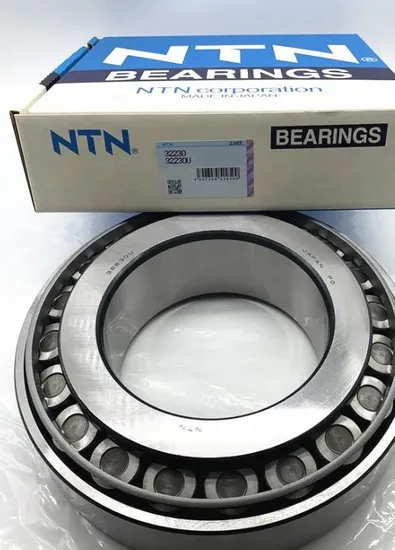
The guide below covers the technical differences between NSK and NTN bearings, clears up common sourcing misconceptions, and gives you a practical framework for picking a supply partner against your own application requirements.
- Why Do Application Conditions Outweigh Brand When Choosing Between NSK and NTN?
- How Do Independent Suppliers Guarantee Authenticity and 72-Hour Dispatch?
- What Is the Real Ownership Cost of NSK and NTN Bearings Sourced from China?
- How Should You Pick the Bearing and the Supplier for Your Application?
- Conclusion
Why Do Application Conditions Outweigh Brand When Choosing Between NSK and NTN?
Bearing performance follows operating conditions, meaning load profiles, rotational speeds, and contamination exposure, not the name on the box. NSK and NTN both build precision industrial bearings, yet their ideal performance envelopes differ in meaningful ways across real environments. Reading those technical distinctions keeps procurement decisions anchored in application data rather than brand assumption.
| Performance Metric | NSK Industrial Bearings | NTN Industrial Bearings |
|---|---|---|
| Dynamic Load Rating (Spherical Roller) | High capacity range | Extended capacity range |
| Fatigue Life (ISO 281) | Standard L10 rating | Extended L10 rating |
| Operating Temperature Range | Standard industrial range | Extended high-temperature range |
| Precision Grades Available | P0 to P2 | P0 to P4 |
| Misalignment Tolerance | Higher tolerance capacity | Standard tolerance capacity |
| Vibration Classification | ISO 15243 V3 | ISO 15243 V3 |
| Dimensional Tolerance | ±0.02mm | ±0.02mm |
A steel mill in Johor, Malaysia had repeated failures with NSK 22320 spherical rollers fitted to continuous casting machines. Their maintenance team first suspected counterfeits, but our failure analysis put the cause on contaminated lubricant rather than any manufacturing fault. Moving to an NTN-equivalent model with a revised seal design and a corrected lubrication schedule cut failures substantially while holding the same precision: tolerance inside ±0.02mm, with vibration class V3 under ISO 15243 confirmed.
The selection method runs through a fixed sequence:
- Load Calculation — Establish radial and axial load needs from the manufacturer dynamic load tables, covering both steady-state and shock loading
- Speed Analysis — Match the bearing type to operating RPM, allowing for cage material limits at high rotational speed
- Environmental Assessment — Weigh temperature extremes, particulate contamination, moisture, and corrosion in the working environment
- Precision Requirement — Choose the grade (P0, P6, P5, or P4 covers most industrial work) from shaft runout tolerance and vibration sensitivity
- Lubrication Compatibility — Confirm seal design and internal geometry suit the available lubrication system and planned maintenance intervals
A supplier with genuine application engineering walks that sequence objectively and recommends the best bearing whatever its brand origin, because its commercial reputation rests on keeping your machinery running rather than pushing one catalog.
How Do Independent Suppliers Guarantee Authenticity and 72-Hour Dispatch?
Fast delivery does not mean cutting corners. Independent suppliers who run their own warehouses and carry a wide SKU range can get standard NSK and NTN models out inside 72 hours, holding precision grades and material certificates to the same level as traditional distribution. The notion that quicker shipping forces a quality trade-off simply overlooks the verification systems such suppliers have already built.
| Sourcing Aspect | Traditional Distribution Channels | Professional China Suppliers |
|---|---|---|
| Traceability Documentation | Basic batch certification | Multi-tier verification (material certs, manufacturing records, logistics tracking) |
| Delivery Lead Time (Standard Models) | Extended waiting period | Rapid dispatch within 72 hours |
| Emergency Order Capability | Premium surcharge, delayed timeline | Standard service with accelerated delivery |
| Anti-Counterfeiting Measures | Visual inspection only | Serial number database cross-check plus holographic label verification |
| Minimum Order Quantity | High threshold for bulk pricing | Flexible volume with tiered discounts |
| Pre-Shipment Verification | Sample-level inspection | Per-batch precision inspection |
An Australian mine met this head-on when an NTN 22230 spherical roller let go inside its ore crusher. Their regular distributor quoted a wait that would have had production down for weeks. They came to us instead, and our Shanghai warehouse shipped the 22230 inside 72 hours with remote installation guidance from our technical team. Downtime finished in days rather than the projected weeks, avoiding a six-figure production loss. Vibration analysis after fitting confirmed ISO 15243 V3 compliance, with tolerance verified inside ±0.02mm of specification.
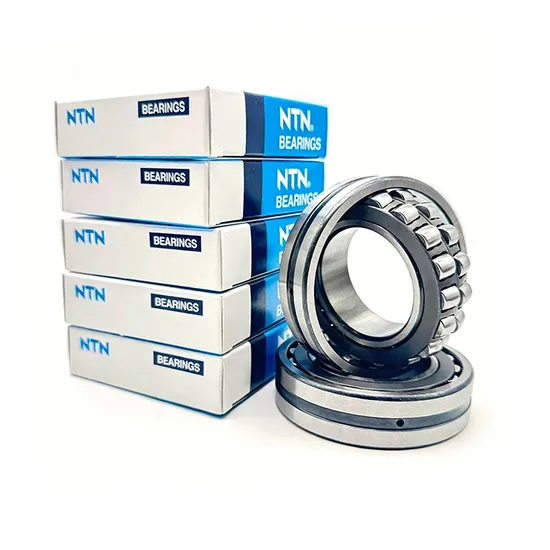
Five mandatory checkpoints run before any shipment leaves the warehouse:
- Serial Number Verification — Cross-reference the manufacturer database to confirm batch authenticity and origin
- Material Certification Review — Look at EN 10204 3.1 paperwork for traceability back to the raw material, checking steel chemistry plus heat treatment records
- Dimensional Inspection — Check critical dimensions against OEM specifications with calibrated equipment, covering bore, outside diameter, and width tolerances
- Packaging Authentication — Check holograms, barcodes, and carton detail against the manufacturer current standard to catch repackaging or relabeling
- Logistics Chain Review — Audit shipping papers to prove an unbroken path from factory to buyer with no unauthorized hand-off
As an independent supplier of compatible replacement bearings, we put every shipment through that same framework. Batch numbers can be checked against maker records, and rare designations, including large bores, unusual precision and clearance options, and ceramic or stainless variants, leave within 48 hours against typical multi-week factory waits. Each shipment carries origin documentation and batch traceability files, with third-party inspection on request. Speed and authenticity can coexist once the systems behind them are engineered properly.
What Is the Real Ownership Cost of NSK and NTN Bearings Sourced from China?
Unit price tells only a slice of the story. True ownership cost covers what you pay, what downtime exposes you to, the value of technical support, how consistent batches are, and whether the supply chain holds. NSK and NTN bearings bought through China typically land a meaningful cost reduction via competitive base pricing, less downtime from faster emergency delivery, and technical services that improve performance and service life.
| Cost Component | European Distributor (Landed Cost) | China Supplier (Including Logistics) |
|---|---|---|
| Base Unit Price (NSK 6310) | Higher baseline | Competitive pricing |
| Base Unit Price (NTN 22208) | Higher baseline | Competitive pricing |
| Emergency Delivery Cost | Premium surcharge | Standard service rate |
| Failure Analysis Support | Additional cost per incident | Included with purchase |
| Bulk Order Discount | Standard tier | Enhanced volume pricing |
| Customization (marking, packaging, docs) | Separate quotation | Accommodated within standard pricing |
| Average TCO Reduction | Baseline | Noticeable reduction achieved |
A European wind turbine OEM illustrates the point. While qualifying main shaft bearings for a 3MW machine, NSK NU2340E.M1.C3 cylindrical rollers were set against the NTN equivalent, bought both through established European channels and through our China chain. Ours came in cheaper per unit and shipped with IATF 16949 certification and full material traceability at no extra charge. Across qualification our engineers sent monthly batch consistency reports and lubrication advice that improved projected bearing life substantially. Projected annual savings over their full demand were significant, and that figure left out the value of a compressed qualification timeline.
The cost advantage compounds in several ways:
- Reduced Downtime Costs — Emergency dispatch prevents long production stops that cost many times the bearing price in lost output
- Technical Support Value — You get failure analysis, L10 life work, and lubrication tuning with the order instead of separately billed extras
- Batch Consistency — Regular monitoring and inspection per batch make performance predictable across replacement cycles, removing surprises from lot-to-lot variation
- Customization Without Premium — Private-label packaging, laser marking, pre-lubrication, and translated paperwork sit inside standard pricing rather than triggering another quotation
For bulk buyers working under annual framework agreements, this model brings supply stability, price predictability, and audit-ready documents, the kind of verification rigor that satisfies quality auditors while cost advantages build up across the organization.
How Should You Pick the Bearing and the Supplier for Your Application?
The right bearing choice comes out of application data rather than catalog browsing. Deciding between NSK and NTN means evaluating five interdependent parameters systematically, then qualifying the supplier with equal rigor. Skip either step and you invite early failures, counterfeit exposure, or supply disruption that no brand loyalty can prevent.
The selection sequence builds on the methodology above and adds supplier-level verification:
- Define Operating Parameters — Before asking for prices, write down radial load, axial load, rotational speed, temperature range, and contamination exposure. Vague specifications attract generic answers that may not suit your conditions.
- Match Precision to Application — Select the ISO grade (P0 general industrial, P6 moderate duty, P5 high-precision machinery, P4 extreme precision) from shaft runout tolerance and vibration sensitivity.
- Specify Clearance Requirements — Settle clearance (C2, CN, C3, or C4) from operating temperature and fit conditions. Getting clearance wrong ranks among the most common causes of early failure.
- Verify Supplier Traceability — Ask for batch documentation covering EN 10204 3.1 material certificates, how serial numbers are checked, and pre-shipment inspection reports. A supplier unwilling to provide these should leave the shortlist at once.
- Assess Application Engineering Capability — Judge whether L10 life work, failure analysis, and lubrication advice come as standard services. Order-takers with no technical bench cannot help you optimize selection or diagnose field failures.
That Brazil near-miss shows why checking every batch beats trusting a brand. The plant had physically swapped the goods, and painstaking pre-shipment inspection was the only thing that caught it. A supplier who cannot show per-batch verification is a liability whatever brands they claim to carry.
Conclusion
Operating conditions decide whether a bearing succeeds. Brand loyalty does not. NSK and NTN both build quality industrial bearings, yet the right choice depends on your environment, and the right partner depends on whether they can verify authenticity, deliver fast, and support your technical needs with documented engineering capability. An independent supplier holding the proper certifications, multi-tier traceability, and application engineering can challenge conventional distribution assumptions and deliver measurable value in ownership cost.
Browse Compatible NTN-Interchange Bearing Models →
Live WMS stock levels, traceability files with each lot, and OEM-grade packaging.
Need a quote for a specific bearing designation? Our engineers reply within one business day.
Request a quote