
How to Source OEM/ODM Bearings from Chinese Factories: Buyer Guide
OEM Engineer Quick Reference
- Compatible replacement supply backed by a full traceability code
- Precision grades available up to P2 / ABEC 9
- L10 life validated against real OEM load profiles
- 72-hour answers on non-standard inquiries
Plenty of buyers still assume Chinese bearings lag behind European brands. Certified factories now hold rejection rates under 0.5%, and that gap has effectively closed.
Buying OEM/ODM bearings out of Chinese plants works best as a structured program blending technical detail, verified certification, and quality traceability, so counterfeits stay out and delivery stays on schedule. What decides the outcome is a partner holding ISO 9001 or IATF 16949 certification, documented quality routines, and engineering support from start to finish, not the cheapest unit price on the table.
Years on the Suzhou factory floor came before the export desk, first in quality checks and later in sourcing. One consignment of deep groove ball bearings headed for a German distributor still stays with me: the batch numbers did not line up with the SKF traceability system and the container was held in Hamburg. The buyer was furious, and rightly so. That is when I understood how many buyers get hurt by untraceable stock or copied markings. Every shipment we send now carries full batch traceability, and we hold deep stock of rare designations such as large bore, special precision, and ceramic variants so nobody waits months for a factory run.
What follows maps the strategic path through China's bearing market, from spotting qualified suppliers to the risk controls that keep counterfeits and late deliveries away from your operation.
- Why Does OEM/ODM Sourcing in China Need a Strategic Approach?
- Which Factors Really Decide the Choice of a Chinese OEM/ODM Bearing Supplier?
- What Does the Step-by-Step Sourcing Process Look Like?
- How Do You Keep Counterfeit and Quality Risk Out of Chinese Sourcing?
- Which Logistics Choices Optimize OEM/ODM Delivery Out of China?
- Conclusion
Why Does OEM/ODM Sourcing in China Need a Strategic Approach?
Counterfeit bearings fail far more often and cost industry billions every year. That is the reason a casual approach to Chinese sourcing can go badly wrong. Unlike catalog parts, OEM/ODM bearings often sit inside high-precision equipment where a small deviation from specification turns into unplanned downtime or a safety incident.
| Metric | Industry Reality |
|---|---|
| Failure Rate | Counterfeit bearings show noticeably higher failure rates than genuine products |
| Quality Control | ISO 9001/IATF 16949 certified Chinese factories implement comprehensive inspection protocols including material certification and dimensional verification |
| Lead Time Variability | Custom bearing production can range from weeks to months depending on supplier capabilities and stock availability |
| Industry-Specific Requirements | Automotive applications require IATF 16949 certification while marine bearings need DNV or Lloyd's classification |
One European wind energy OEM paid the price after buying from a trader holding no certification. Their first gearbox bearing batch failed early, and downtime plus repairs ran into six figures. After moving to our ISO 16281 certified production they have logged zero failures across thousands of bearings installed over several years. The turnaround came from verified certification and real technical collaboration: we worked with their engineers to tune the material selection for offshore conditions.
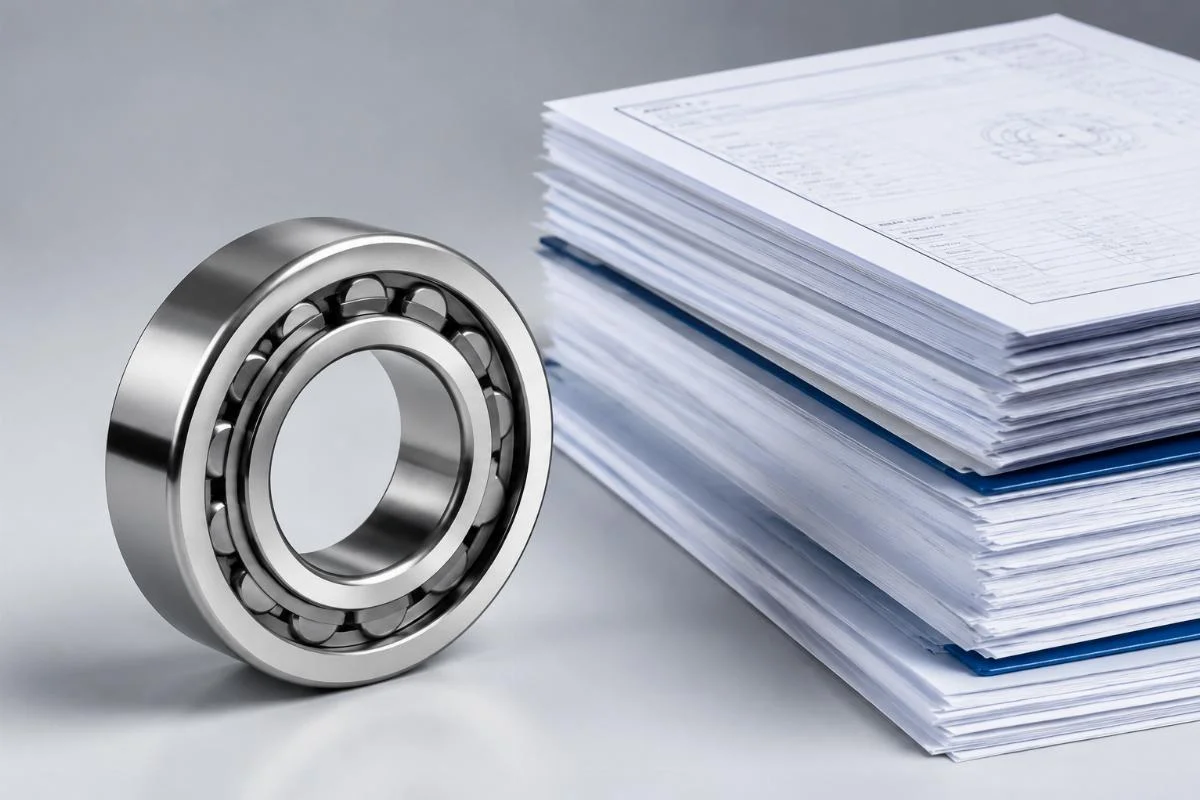
- Certification Verification – Ask for the full document set: ISO 9001 and IATF 16949 plus sector credentials such as DNV for marine duty
- Quality Control Audit – Require written QC routines spanning incoming material checks, in-process testing, and final sign-off
- Traceability System – Confirm the supplier tracks every lot from raw material through to finished product under a unique serial number
- Technical Capability Assessment – Gauge engineering capacity for application-specific design work and failure analysis
- Anti-Counterfeiting Measures – Verify that holographic labels and database lookup are genuinely implemented
Which Factors Really Decide the Choice of a Chinese OEM/ODM Bearing Supplier?
Choosing on price alone usually raises total cost through quality problems and late deliveries. Buyers who succeed put technical capability and reliability ahead of headline savings, because bearing performance feeds straight into equipment uptime and operating efficiency. In our experience the cheapest quotes tend to arrive with hidden costs, whether thin materials, weak quality control, or delivery you cannot plan around.
| Evaluation Dimension | Common Mistake | Recommended Approach |
|---|---|---|
| Technical Support | Relying on general product catalogs without application engineering | Partner with suppliers offering bearing selection, load calculation, and failure analysis expertise |
| Stock Availability | Assuming custom means no stock | Verify suppliers with extensive SKU ranges who can modify stock bearings for faster delivery |
| Quality Assurance | Accepting generic quality claims | Require documented processes for material certification and dimensional measurement |
| Customization Flexibility | Limiting specifications to standard catalog options | Select suppliers offering non-standard materials, modified clearance, and precision grades |
| Logistics Capabilities | Using third-party freight without consolidation | Choose suppliers with self-operated warehousing for consolidated shipments and phased delivery |
An agricultural equipment parts distributor in the US ran into seasonal supply trouble that was straining customer relationships. Its previous supplier could not keep consistent stock across the thousands of SKUs its African aftermarket accounts needed. Under our consolidated shipment program, order processing time fell dramatically and bulk discounts were secured while fill rates stayed near perfect through peak season. Self-operated warehousing let us pre-position the fast-moving agricultural bearings, so mixed-SKU orders also went out quickly.
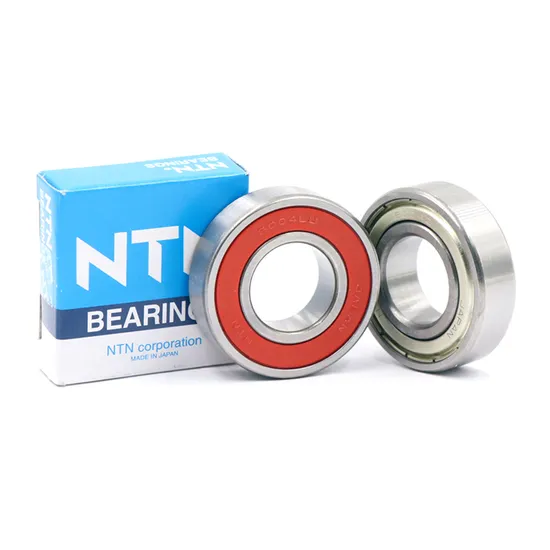
- Technical Expertise – Probe engineering capacity, including selection software and application matching services
- Inventory Management – Check stock depth on critical SKUs and emergency dispatch for breakdown calls
- Quality Processes – Review inspection routines covering CMM measurement of dimensions plus material composition analysis
- Customization Range – Look at options for non-standard dimensions, stainless or ceramic materials, and precision grades
- Logistics Network – Confirm self-operated warehousing, global shipping, and consolidated order options
What Does the Step-by-Step Sourcing Process Look Like?
A structured sourcing process shrinks supply chain risk compared with ad-hoc buying. The methodology forces clear technical communication, verifies quality at several stages, and keeps delivery expectations realistic. Skipping steps, above all sample testing and factory audits, produces expensive mistakes that due diligence would have prevented.
| Process Step | Key Advantage | Ideal Application |
|---|---|---|
| Requirement Definition | Prevents miscommunication | All OEM/ODM projects requiring precise specifications |
| Supplier Shortlisting | Reduces evaluation time | Initial supplier qualification for new programs |
| Sample Testing | Validates performance claims | Custom material or design applications |
| Factory Audit | Verifies production capabilities | High-volume or critical application components |
| Contract Negotiation | Establishes clear expectations | Long-term supply agreements |
| Production Monitoring | Ensures quality during manufacturing | Complex or high-precision bearings |
| Post-Delivery Support | Provides ongoing technical assistance | New application implementations |
A crusher breakdown once put us on the clock for a mining customer that needed spherical roller bearings immediately, and the parts were moving within hours. It began with precise requirement definition: 240mm outside diameter, C3 clearance, and full details of the crusher duty came from their procurement manager. Rather than wait for a custom run we pulled the closest units already on the shelf and had them modified to the exact specification. Our engineers also analyzed the damaged units and issued a written report that helped prevent a repeat.
- Define Specifications – Record precision grade, material requirements, clearance values, and application parameters
- Qualify Suppliers – Score prospective partners on certification, technical depth, and relevant sector experience
- Sample Testing Protocol – Run dimensional checks, material analysis, and performance testing ahead of full production
- Factory Audit – Confirm production capability, quality systems, and traceability infrastructure on site
- Contract Negotiation – Fix terms covering quality standards, delivery schedules, and liability
- Production Monitoring – Carry out in-process inspections plus final verification before shipment
- Post-Delivery Support – Offer technical backup, failure analysis, and continuing quality monitoring
How Do You Keep Counterfeit and Quality Risk Out of Chinese Sourcing?
Traceability at lot level and anti-counterfeit technology are the baseline defense against copied markings and stock of unknown origin. The bearing trade has a counterfeit problem that feeds on buyers who reward price over verification. Skilled counterfeiters can copy packaging, labels, and basic markings, which is why a visual check alone rarely finds them.
| Risk Factor | Vulnerable Approach | Protected Approach |
|---|---|---|
| Traceability | Self-reported batch numbers | Database-verifiable serial tracking from raw material to finished product |
| Anti-Counterfeiting | Basic labels only | Holographic labels with database verification systems |
| Inspection Protocol | Visual check at receipt | Third-party inspection with dimensional and material verification |
| Documentation | Generic certificates | Batch-specific certificates matching physical markings |
| Supplier Verification | Online claims only | On-site audit with certification cross-referencing |
A project supplier in the Middle East met this the hard way when a tapered roller bearing consignment that looked genuine failed early in service. The investigation found substandard steel and improper heat treatment, faults that surface only under load. After adopting our verification protocol, with lot numbers cross-checked in maker databases and third-party dimension checks added, counterfeit incidents stopped.
Risk mitigation comes down to stacking several verification layers:
- Pre-Shipment Verification – Cross-check lot codes in maker databases before signing for delivery
- Dimensional Inspection – Measure critical dimensions by CMM against specification tolerances
- Material Analysis – Confirm steel composition and hardness by spectrographic analysis
- Documentation Review – Make sure conformity certificates match the physical markings and lot numbers
- Third-Party Inspection – Bring in an independent inspection body for high-value or safety-critical orders
Which Logistics Choices Optimize OEM/ODM Delivery Out of China?
Self-operated warehousing plus consolidated loads shorten lead times and make mixed-SKU delivery more dependable. Sourcing models built on third-party warehousing and split shipments add delay and invite document errors. Buyers who work with a supplier that runs its own warehouse gain in speed, accuracy, and cost control.
| Logistics Factor | Traditional Model | Optimized Model |
|---|---|---|
| Warehousing | Third-party facilities with limited stock visibility | Self-operated warehouses with real-time inventory tracking |
| Order Consolidation | Separate shipments for each SKU | Combined shipments reducing freight costs and customs complexity |
| Dispatch Speed | Days to weeks for order processing | Hours for stock items with established documentation |
| Documentation | Generic packing lists | Batch-specific documentation with traceability certificates |
| Emergency Response | Limited flexibility for urgent orders | Priority dispatch capabilities for breakdown situations |
A European OEM with seasonal swings had been fighting inconsistent delivery from its previous Chinese supplier. Deep groove ball bearings arrived in one shipment and spherical rollers in another, sometimes weeks apart, which complicated inventory planning and delayed production. Under our consolidated model the total lead time dropped noticeably and customs clearance got simpler. Self-operated warehousing let us pre-position their highest-turnover SKUs so dispatch stayed fast even at peak.
The logistics gains reach past speed:
- Inventory Pre-Positioning – Keep high-turnover SKUs on the shelf so orders ship at once
- Consolidated Documentation – Issue one unified set of packing lists, origin certificates, and traceability records
- Flexible Shipping Options – Quote FOB, CIF, or DDP depending on buyer preference
- Emergency Dispatch – Give breakdown orders priority handling with fast response
- Quality Preservation – Keep controlled storage conditions so nothing corrodes or gets damaged in the warehouse
Conclusion
Getting OEM/ODM bearings out of Chinese factories comes down to technical precision, disciplined supplier verification, and traceability that holds up to audit. Certified Chinese manufacturers have closed the gap with international brands, yet counterfeit risk and uneven quality from uncertified suppliers remain real threats. Buyers who invest in supplier qualification, apply layered verification, and choose partners with self-operated warehousing and consolidated logistics end up ahead on cost, reliability, and risk.
Browse Compatible NTN-Interchange Bearing Models →
Live WMS stock levels, traceability files with each lot, and OEM-grade packaging.
Need a quote for a specific bearing designation? Our engineers reply within one business day.
Request a quote