
Genuine vs Aftermarket Bearings: A Buyer's Authentication Guide
OEM Engineer Quick Reference
- Compatible replacement supply backed by a full traceability code
- Precision grades available up to P2 / ABEC 9
- L10 life validated against real OEM load profiles
- 72-hour answers on non-standard inquiries
A sealed carton with the right logo proves very little. In fact roughly half of the counterfeit industrial bearings we have examined seize up within a few months even though the boxes looked genuine, while authenticated units from traceable supply chains keep running close to nominal reliability under identical duty.
Telling a genuine bearing from a look-alike takes a layered check: traceability records, material certification, and supplier credentials all have to line up, and eyesight alone will not settle it. Buying authenticated bearings from a traceable Chinese supply chain removes most of the unplanned stoppages we see in the field, and the three pillars behind that are authentication practice, engineering support, and dependable global logistics.
Reading bearing codes on the Wuxi shop floor was my first job, long before anyone let me near a purchase order. Then one day a container of spherical rollers came back from Saudi Arabia. The outer ring marking looked crisp, yet the cage pockets had drifted by a fraction and continuous load killed the L10 life. Nothing on a datasheet flags that. Since then I have taken procurement teams through the checkpoints we now apply at every intake, and we have tracked down counterfeit-driven breakdowns in several regions.
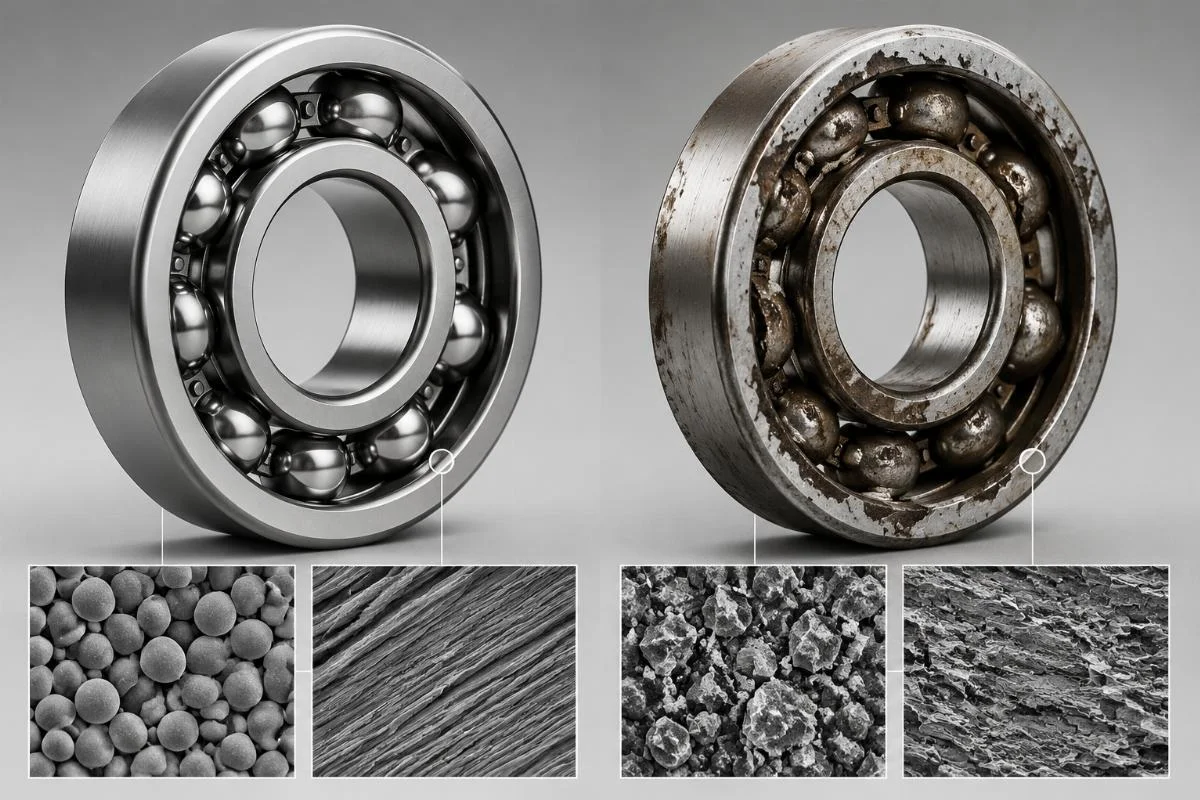
Grasping how authenticity actually shows up in service is the first step toward a procurement strategy you can defend, because the gap between a routine swap and a stopped line usually comes down to knowing what to inspect.
- Why Does Bearing Authenticity Decide How Often a Line Stops?
- Which Five Checks Reliably Expose Fake Bearings from China Suppliers?
- How Do Genuine and Aftermarket Units Compare on Lifetime Cost?
- What Paperwork Should a Chinese Bearing Supplier Hand Over?
- Conclusion
Why Does Bearing Authenticity Decide How Often a Line Stops?
Fake bearings drain profit quietly, through stoppages and through the equipment they damage on the way out. Genuine and aftermarket units both do the basic job of carrying load with low friction, but the way each is built, tested, and proven is far apart. Units built by the original makers such as SKF, FAG, and NSK pass through controlled quality gates, material testing, and validation for the actual application. Aftermarket units, usually produced by parties working without the original drawings, tend to economize on steel grade and precision.
| Performance Indicator | Industry Reality with Aftermarket Bearings | Genuine Bearing Performance |
|---|---|---|
| Average Lifespan | Noticeably reduced in heavy-duty applications | Substantially extended under identical conditions |
| Failure Rate in Mining and Steel | Substantially higher | Controlled and predictable |
| Dimensional Accuracy to ISO 15243 | Majority fail tolerance standards | Full compliance verifiable per batch |
| Material Hardness Consistency | Inconsistent values on Rockwell scale | Minimum 60 HRC maintained across production runs |
A steel mill in Southeast Asia we work with suffered several unplanned stops in a short window, all traced to 6205-2RS deep groove ball bearings failing early. Root cause analysis showed counterfeit units whose steel alloy sat below spec and fatigued under thermal load. Once they moved to our compatible replacements for SKF-series applications, backed by batch-level traceability, the counterfeit-related stops ended and mean time between failures stretched considerably.
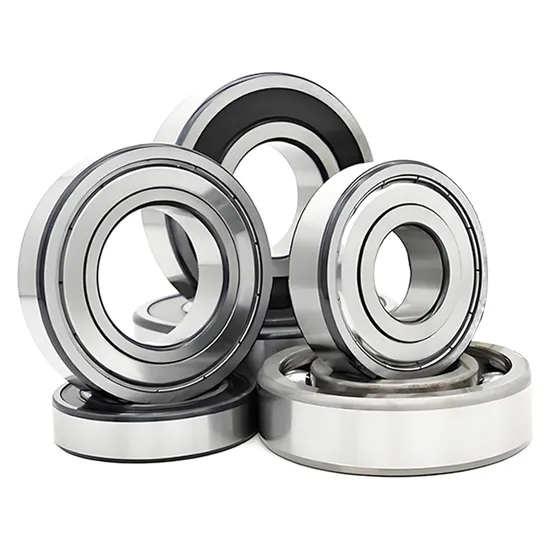
When you weigh genuine against aftermarket for critical duty, sort components by how much a stop would hurt. Conveyors in a mine or main spindle bearings in a steel mill need fully traceable, authenticated units, and there is no sensible middle ground. Logging failure history and inspecting every receipt, whatever a supplier claims, is the foundation of any real downtime program.
Which Five Checks Reliably Expose Fake Bearings from China Suppliers?
A visual pass misses most fakes. Authentication works best in layers, because competent counterfeiters now copy packaging almost perfectly. Our work with industrial buyers shows that combining traceability, material quality, and supplier credentials cuts authentication errors sharply compared with trusting any single checkpoint.
| Verification Dimension | Common Mistake | Correct Authentication Method |
|---|---|---|
| Packaging Analysis | Relying solely on logo presence | Checking holographic labels with micro-text, embossed serial numbers, and manufacturer-specific color gradients |
| Traceability Verification | Accepting batch codes without validation | Cross-referencing batch numbers in official manufacturer databases |
| Material Certification | Ignoring chemical composition reports | Reviewing CMM reports for alloy consistency and Rockwell hardness test results (minimum 60 HRC for industrial bearings) |
| Laser Etching Quality | Assuming all etched markings are genuine | Examining for precise, evenly spaced characters with consistent depth—counterfeits often show uneven or shallow etching |
| Supplier Documentation | Accepting generic quality certificates | Requesting manufacturer-issued certificates of conformance with matching batch numbers and IATF 16949 accreditation |
A repair workshop serving construction machinery in the Middle East brought us 22218 E spherical rollers gathered from suppliers nobody could name, jumbled across several lots. Their technicians saw no way to tell fake from real by eye. We ran our five-stage screen on the compatible replacements they needed for NSK-series applications: codes checked in the manufacturer database, dimensions measured to ±0.02mm, chemistry compared with GCr15 chrome steel, laser part numbers read off, and ISO 9001 inspection reports reviewed. A large share proved counterfeit, which kept bad parts out of customer repairs.
Any receiving dock can run five practical steps: look at a holographic label from two angles and confirm the pattern shifts; scan the QR code in the maker app to surface production date, plant, and quality records; match chemistry to the OEM specification, for instance GCr15 chrome steel where high loads are involved; check bore, outside diameter, width, and clearance with calibrated instruments against the datasheet; and ask for recent third-party audit reports proving access to genuine maker channels. As an independent supply partner we still push each batch number through the maker traceability system before dispatch, because that is the floor and not a bonus. When buyers ask how to spot a real bearing, this routine is what separates a serious Chinese supplier from guesswork.
How Do Genuine and Aftermarket Units Compare on Lifetime Cost?
Over a twelve-month horizon aftermarket bearings often cost more, even though the invoice looks cheaper on day one. The belief that aftermarket suits non-critical duty quietly ignores early failure, lost output, and emergency replacement. Across mining, steel, and wind projects our ownership-cost work keeps landing on the same answer: genuine-equivalent quality wins in harsh service.
| Cost Component | Genuine Bearings | Aftermarket Bearings |
|---|---|---|
| Initial Unit Price | Higher (e.g., Timken tapered roller bearing at premium) | Roughly half the genuine price |
| Average Lifespan in Mining Conveyors | Substantially extended (18 months typical) | Noticeably reduced (5 months under identical conditions) |
| Downtime Cost per Failure | Near zero—failures prevented | Mid-five-figure sum per event including labor, lost production, and emergency shipping |
| Total 12-Month Amortized Cost | Lower when downtime is factored | Substantially higher due to multiple replacements and unplanned stoppages |
A mining customer in Australia is a clean example. They first bought aftermarket cylindrical roller bearings equivalent to Koyo at about half the price of the genuine article for their conveyors. Within a short run most of them failed, and several stoppages together cost well into six figures. After moving to our compatible replacements for Koyo-series applications, with technical support that covered load recalculation and lubrication advice for their dusty site, annual bearing spend fell appreciably and failure-related downtime disappeared in the following period. The MTBF gain turned a recurring crisis into a scheduled maintenance item.
The same pattern repeats in every sector we serve. The sticker-price gap between genuine and aftermarket is real, but it is only a slice of the cost equation. Once one stoppage on a critical line can burn a mid-five-figure sum during a single shift, the case for authentication becomes hard to argue with. Teams that build an honest TCO, including replacement labor, emergency freight, and production loss, keep finding that genuine-equivalent bearings from a traceable Chinese supply chain are the cheaper option over any horizon that matters.
What Paperwork Should a Chinese Bearing Supplier Hand Over?
Lot-level traceability, a conformance certificate issued by the maker, and current ISO 9001 and IATF 16949 paperwork are the floor for any serious industrial buyer. Documents are not bureaucracy; they are insurance against fakes entering the plant. A supplier who stalls, or who sends only a generic quality certificate, is telling you their supply chain will not survive scrutiny.
Every shipment should arrive with: lot numbers that reconcile exactly against the maker database; a conformance certificate from the bearing producer rather than a trading intermediary, with part, batch, and date codes all matching; ISO 9001 covering the quality system plus IATF 16949 where automotive or precision work is in scope; test reports on material chemistry for a grade such as GCr15 chrome steel; and, on request, third-party inspection sheets showing dimensional accuracy to ISO 15243 tolerances.
We supply independent compatible replacements rather than authorized branded stock, so each order still travels with full batch traceability and a buyer can check any unit against its maker records. Stock covers precision levels P0, P6, P5, and P4, with variants built for heavy duty, high speed, stainless service, ceramics, and sealing, plus C2, CN, C3, and C4 clearance choices. Rare items such as oversized bores, unusual precision and clearance pairings, or ceramic and stainless variants sit in depth on our shelves and ship in days instead of the long factory queue. Traceability you can check, together with availability on scarce part numbers, is what turns a vendor into a partner.
Treat a document request as a screen rather than a ritual. Where a supplier cannot hand over a maker-issued conformance certificate tied to the batch, walk away. A counterfeit part in critical service costs far more than its price: wrecked equipment, lost output, and safety exposure follow. On the genuine versus aftermarket question, paperwork is your first and strongest line of defense.
Conclusion
Authentication is a precondition, not an option, and it sits at the floor of industrial bearing procurement. Eye checks catch only a minority of fakes, and a stacked approach covering traceability, material certification, dimensional measurement, and credential audits remains the only dependable separator. Honest ownership-cost math favors genuine-equivalent bearings from a traceable Chinese supply chain once downtime, replacement frequency, and collateral damage enter the ledger. Ask for batch-level documents with every delivery, check them against maker databases, and treat resistance as a disqualifier.
Browse Compatible NTN-Interchange Bearing Models →
Live WMS stock levels, traceability files with each lot, and OEM-grade packaging.
Need a quote for a specific bearing designation? Our engineers reply within one business day.
Request a quote